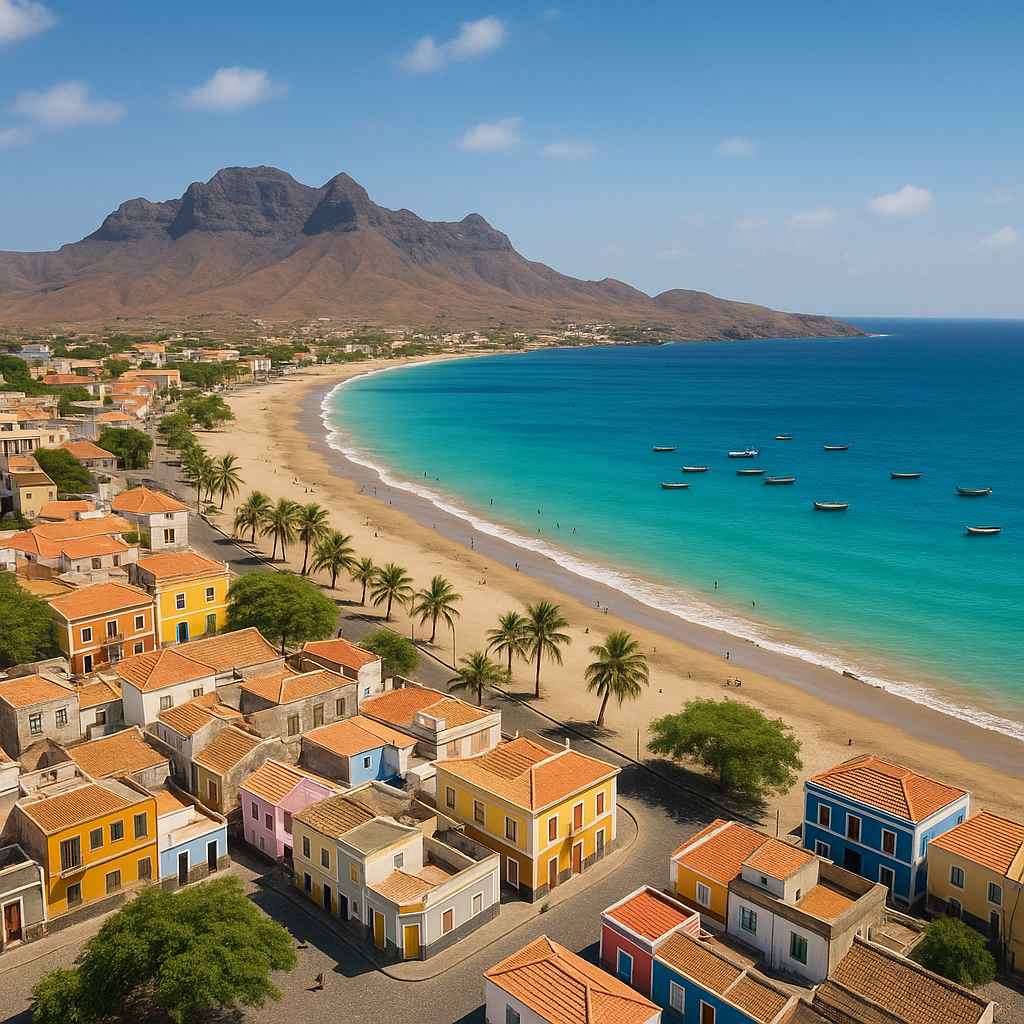
Cabo Verde: The Atlantic’s Hidden Paradise of Music, Mountains, and Magic
Published on
Average Read time: 6 minutes 43 seconds
Cabo Verde – The Atlantic’s Hidden Paradise
Off the coast of West Africa, where the Atlantic waves shimmer under golden sunlight, lies Cabo Verde — a breathtaking archipelago of 10 volcanic islands that blend African soul with Portuguese charm. Known for its vibrant music, warm people, and stunning landscapes, Cabo Verde (or Cape Verde) is one of the world’s most captivating small nations.
It’s a place where mountains meet the sea, where every island tells a different story, and where time slows to the rhythm of morna, the nation’s beloved music.
Geography and the Islands of Cabo Verde
Cabo Verde consists of ten major islands and several smaller islets divided into two groups:
- Barlavento (Windward) Islands: Santo Antão, São Vicente, Santa Luzia, São Nicolau, Sal, Boa Vista
- Sotavento (Leeward) Islands: Maio, Santiago, Fogo, Brava
Each island has a unique personality — from the white beaches of Sal and Boa Vista to the mountain trails of Santo Antão and the volcanic grandeur of Fogo.
Despite its small land area, the nation’s diversity in geography and culture is astonishing.
A Journey Through Time – History of Cabo Verde
Cabo Verde’s history is a story of discovery, resilience, and renewal.
Uninhabited until the 15th century, the islands were discovered by Portuguese explorers in 1456. Soon, they became a key stopover for the Atlantic slave trade, leaving a deep imprint on the islands’ people and culture.
In 1975, Cabo Verde gained independence, guided by its founding leader Amílcar Cabral, whose vision for unity and progress shaped the nation’s destiny.
Today, it stands as one of Africa’s most stable democracies, blending tradition with modernity.
People and Culture
Cabo Verdeans are known for their resilience, creativity, and warmth. The population of about 600,000 is a beautiful mix of African and European ancestry, giving rise to a rich Creole culture that’s reflected in music, cuisine, and everyday life.
The people embody the spirit of “Morabeza” — a word that captures their unique sense of hospitality, kindness, and joy in welcoming visitors.
Language and Religion
The official language is Portuguese, but most people speak Kriolu (Cape Verdean Creole) — a melodic language infused with Portuguese, African, and local influences.
Religion is predominantly Roman Catholic, but faith often intertwines with traditional practices, reflecting the islands’ mixed heritage.
The Cabo Verdean Way of Life
Life in Cabo Verde is vibrant yet tranquil — a harmony between simplicity and celebration. The pace is relaxed, but the passion for music, art, and connection is ever-present.
The Soul of Morna – Cabo Verde’s National Music
No mention of Cabo Verde is complete without Morna, the country’s most famous musical style — emotional, soulful, and poetic. It tells stories of love, nostalgia, and longing, often inspired by life at sea.
Cesária Évora, the "Barefoot Diva," brought Morna to the world stage, turning Cabo Verde into a symbol of beauty, emotion, and song.
Festivals and Celebrations
Cabo Verde’s festivals are a riot of color, rhythm, and laughter.
- Carnival of Mindelo – A dazzling spectacle rivaling Rio’s carnival.
- Baía das Gatas Music Festival – Held on São Vicente’s beaches, blending local and international sounds.
- Fogo Wine Festival – Celebrating the volcanic vineyards of Fogo Island.
Each festival is a chance to feel the heartbeat of the islands.
Natural Beauty and Landscapes
From sun-kissed beaches to misty mountains, Cabo Verde’s landscapes are breathtakingly diverse.
- Sal & Boa Vista: Crystal-clear waters, dunes, and coral reefs.
- Santo Antão: Dramatic green valleys and rugged hiking trails.
- Fogo: Home to Pico do Fogo, an active volcano rising 2,829 meters above sea level.
- Santiago: The largest island, rich in history, markets, and culture.
Every island is a world of its own — and together, they form an explorer’s paradise.
Adventure and Ecotourism
Cabo Verde’s natural wonders invite adventure:
- Hike across Fogo’s volcanic slopes.
- Dive into the turquoise waters of Sal.
- Spot whales and turtles along Boa Vista’s shores.
- Trek through Santo Antão’s breathtaking mountain paths.
The country is increasingly embracing sustainable tourism, balancing growth with environmental care.
The Economy of Cabo Verde
Tourism drives much of Cabo Verde’s economy, alongside fishing, agriculture, and remittances from the large diaspora.
Recent efforts to diversify include investments in renewable energy, digital innovation, and marine conservation.
Despite limited resources, Cabo Verde boasts one of Africa’s most successful economic models for a small island nation.
Cuisine of Cabo Verde
Cabo Verdean cuisine is as flavorful as its music.
Staples include cachupa, a hearty stew of corn, beans, and fish or meat — the national dish.
Seafood is abundant: grilled tuna, octopus salad (salada de polvo), and lobster are favorites.
Tropical fruits like mango, papaya, and coconut add a sweet touch to island life.
Pair your meal with a glass of Fogo wine, grown in volcanic soil for a truly unique taste.
The People’s Spirit – Hospitality and Hope
Cabo Verdeans are known for their optimism and unity.
Despite challenges like limited natural resources and climate change, the country’s strong community bonds and focus on education and equality keep it moving forward.
The nation’s diaspora, spread across Europe and the Americas, remains deeply connected to its roots, often supporting development back home.
Future Prospects of Cabo Verde
Cabo Verde’s future shines bright. With renewable energy projects, digital transformation, and green tourism, it’s charting a sustainable path forward.
Its vision: to be a model of resilience, creativity, and cultural richness in the Atlantic.
FAQs About Cabo Verde
Q1: Where is Cabo Verde located?
Cabo Verde lies about 600 km off the coast of West Africa in the central Atlantic Ocean.
Q2: What language do Cabo Verdeans speak?
Portuguese (official) and Kriolu (widely spoken Creole language).
Q3: Is Cabo Verde safe for tourists?
Yes, it’s one of Africa’s safest and most politically stable countries.
Q4: What’s the best time to visit Cabo Verde?
From November to June, when the weather is warm and dry.
Q5: What’s Cabo Verde famous for?
Its music (Morna), volcanoes, beaches, and friendly people.
Q6: Do you need a visa to visit Cabo Verde?
Many nationalities can enter visa-free for short stays; check the official tourism website for updates.
Conclusion
Cabo Verde is not just a destination — it’s a feeling.
It’s the melody of the ocean, the warmth of a smile, and the rhythm of a heart that beats to the sound of morna.
For travelers seeking beauty, culture, and serenity, Cabo Verde is the Atlantic’s best-kept secret — an unforgettable blend of music, nature, and magic.